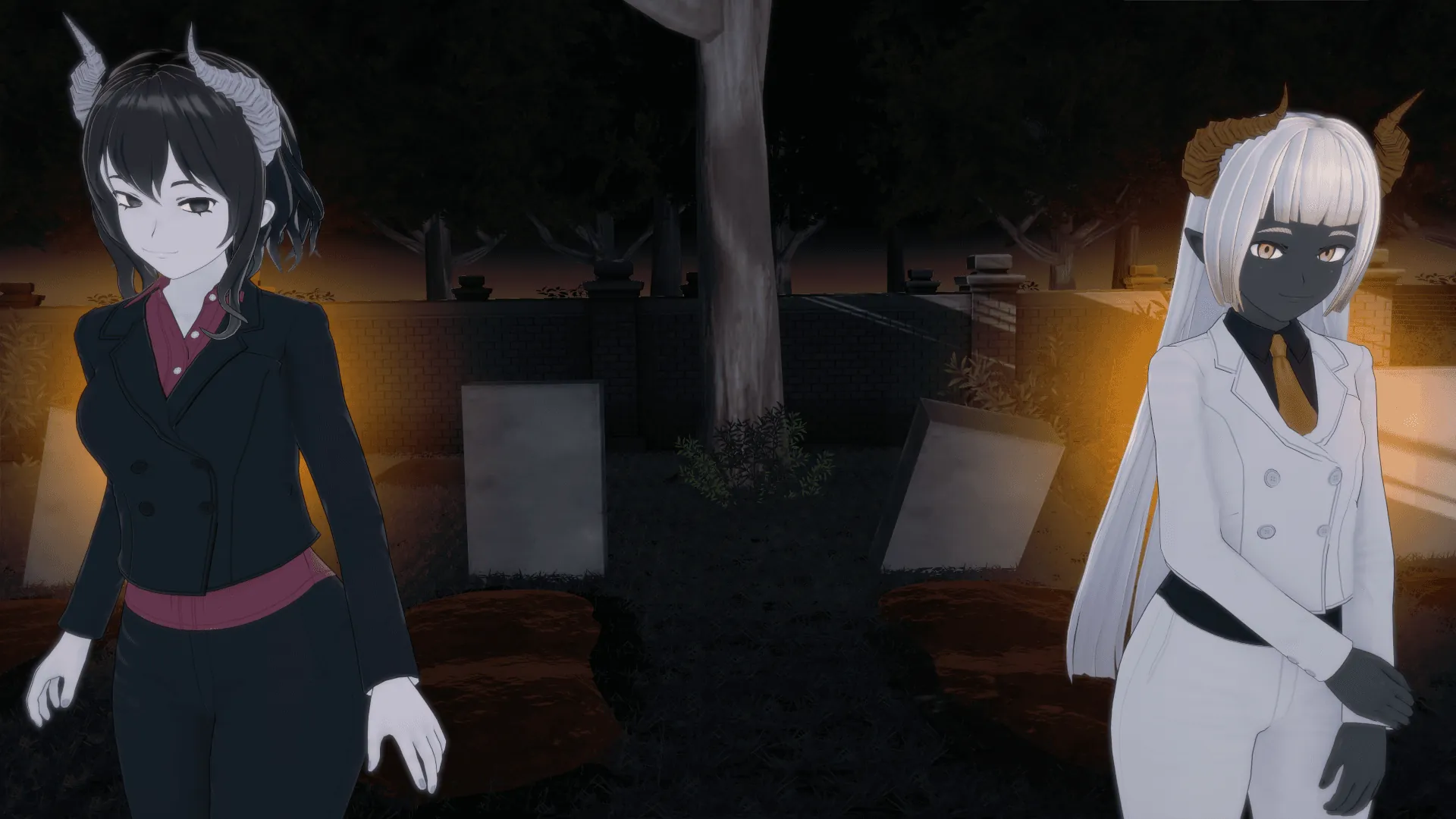
Time Loop Hunter
Play Time Loop Hunter
Time Loop Hunter Screenshots





Time Loop Hunter review
A practical, story-driven guide to getting the most out of Time Loop Hunter
Time Loop Hunter is a choice-driven adventure where you relive the same 15 days, trying to fix your life, stop a strange threat, and build deeper connections with the characters around you. From the outside it looks like just another adult visual novel, but the time travel mechanics, investigation gameplay, and branching storylines make it much more strategic and replayable. In this guide, I’ll walk you through how Time Loop Hunter works, share some personal lessons from my own runs, and show you how to plan loops so you see more story, avoid frustrating dead ends, and enjoy the game at your own pace.
How Time Loop Hunter Works: Story, Loops and Core Mechanics
So, you’ve stepped into the strange, haunting world of Time Loop Hunter and maybe you’re feeling a little… lost in time? 😅 Don’t worry, that’s completely normal. This isn’t a game you just pick up and master in an hour. It’s a layered, narrative puzzle where feeling disoriented at first is part of the intended experience. This chapter is your anchor. We’re going to break down exactly how does Time Loop Hunter work, from its gripping story to the nuts and bolts of its time loop mechanics. Consider this your friendly, story-driven roadmap to getting started.
What is the main story in Time Loop Hunter?
At its heart, Time Loop Hunter story is about a second chance wrapped in a terrifying mystery. You play as Jon, a 22-year-old who feels like his life has already derailed. Stuck in a rut of regret and dead ends, he’s suddenly pulled into a reality-bending situation: a repeating 15-day cycle in his seemingly ordinary hometown.
But this isn’t a gift without a price. A sinister, parasitic threat is lurking in the shadows of the town, and Jon is seemingly the only one aware of the looping time. Armed with this painful knowledge, you must use each reset to investigate the growing danger, mend broken relationships, and uncover your own role in this cosmic mess. The Time Loop Hunter gameplay masterfully blends personal drama with supernatural investigation.
Think of it less as a typical “game over” scenario and more like being a detective in a living, breathing novel where you can re-read chapters. You’ll navigate adult themes of regret, responsibility, and connection, all while trying to stop a hidden catastrophe. The characters around you have their own schedules, secrets, and struggles, and your repeated interactions with them form the core of the emotional journey.
I remember my first loop vividly. I was drowning in names, faces, and a map full of locations I didn’t know. A timer at the top of the screen kept ticking down, and I spent the entire 15 (in-game) days basically just introducing myself to everyone, missing almost every major story beat. I felt like I’d accomplished nothing! But here’s the secret: that was an accomplishment. That first run is your notebook. It’s meant to be overwhelming. Every bit of dialogue you hear, every location you stumble into, and every dead end you hit is valuable intel for the next loop. The Time Loop Hunter guide mindset starts with accepting that initial confusion as your most powerful tool: knowledge.
How does the 15‑day time loop system really work?
This is the brilliant, beating heart of the experience. The time loop mechanics in Time Loop Hunter are both a narrative device and your primary gameplay tool. Here’s the straightforward breakdown:
You have exactly 15 in-game days. Each day is divided into key time blocks (like Morning, Afternoon, Evening). During these blocks, you can travel to different locations on the map—the diner, the park, an apartment building, etc.—to find characters and trigger events. Every story beat, conversation, and clue is tied to a specific person, place, and time. When the 15th day concludes, the world resets. The clock winds back, characters return to their default states and locations, and you start Day 1 again as Jon.
But you, the player, remember everything.
This is the core loop of Time Loop Hunter gameplay. Here’s what typically resets:
* Character schedules and routine dialogue.
* Story events you haven’t permanently influenced.
* Your immediate progress on most objectives.
And here’s what carries over in more subtle ways:
* Your Player Knowledge: This is everything. Knowing that Sarah has a breakdown at the lake on Day 7 at Evening, or that the old bookstore has a hidden clue after you befriend the owner.
* Unlocked Pathways: Some actions in one loop can “soft unlock” opportunities in the next. For example, learning a character’s secret in loop one might give you a new dialogue option to confront them with in loop two, even if they don’t remember telling you.
* Permanent Flags: Very rarely, major, plot-altering choices can set a flag that persists through resets, subtly changing the world’s state.
The magic is in experimentation. You can’t see and do everything in one 15-day cycle. The game is designed for multiple, focused playthroughs of the timeline. Let’s use a mini case study:
Loop 1 (The Scout): You ignore the main plot pressure. You just explore. You follow one character for a whole day to learn their routine. You visit every location just to see who’s there. Your goal isn’t to “win,” but to map the town’s heartbeat. You take notes (mental or real!).
Loop 2 (The Specialist): Now you use that map. You think, “I want to learn more about the reclusive artist, Leo.” You plan your days around being where he is, using the knowledge from your first loop to find him and using your actions to unlock his unique story branch. You might completely ignore other major events happening elsewhere.
This is how you peel back the layers of Time Loop Hunter story. Each loop is a new hypothesis. “What if I stop this event from happening?” or “What if I show this piece of evidence to that person?” The story unfolds through this deliberate, repeated probing.
To summarize, the core systems you’re engaging with are:
* Narrative Exploration: Uncovering the main mystery and character arcs.
* Time Management: Deciding how to spend your limited daily slots.
* Investigation: Finding clues and connecting timelines of events.
* Relationship Building: Using repeated interactions to deepen bonds.
Key mechanics that every new Time Loop Hunter player should know
Alright, let’s get practical. Beyond the big loop idea, here are the daily systems you’ll be hands-on with. Mastering these is your first step toward becoming a proficient Time Loop Hunter.
Time & Location Management: This is your main puzzle. Each day, you have a limited number of moves. Choosing to go to the Downtown Plaza in the Afternoon means you are not at the Library or the Riverfront. The game doesn’t pause to let you think, so planning is key. A great Time Loop Hunter tip for beginners is to not plan too much on your first few runs! Use them to learn what happens in different places at different times.
Dialogue & Relationships: Talking is your primary action. Choices matter, but not always in the way you think. Sometimes, asking the wrong question closes a path for that loop. Other times, a seemingly insignificant comment can be the key to unlocking a huge revelation three loops later. Pay attention. The Time Loop Hunter narrative rewards observation.
The Task Log & Clues: Your menu will have an objective log and a clue collection. This isn’t a traditional quest list that holds your hand. It’s more of a detective’s board, updating with vague hints and pieces of information you’ve found. Connecting these clues is up to you. The investigation revolves around understanding the parasitic threat’s movements, spotting inconsistencies in people’s stories, and literally piecing together a timeline of the sinister events occurring around you.
Here’s a simple table to visualize a basic day’s potential structure:
| Time Block | Location Choice A | Possible Encounter / Outcome |
|---|---|---|
| Day 4 – Morning | City Park | Find a character exercising; can choose to join them (builds rapport) or search a bench for a hidden item. |
| Day 4 – Afternoon | University Campus | Attend a lecture to gain a specific piece of intellectual knowledge needed later, or meet a student in crisis at the courtyard. |
| Day 4 – Evening | Main Street Diner | Overhear a crucial conversation between two NPCs, or have a quiet dinner with a friend to advance their personal storyline. |
Practical Advice for Your First Loops:
🎯 Don’t try to do everything. Seriously, let this go. Your goal in loops 1-3 is learning, not saving the world.
📝 Take notes. Jot down who you see and where/when you see them. This homemade guide will become priceless.
🔍 Embrace “failure.” Sometimes, the most interesting scenes and story branches are triggered by making a “wrong” choice or missing an event. Use a loop intentionally to see what happens if the town festival goes wrong, or if you avoid a certain person entirely.
🧠 Talk to everyone, every time. Schedules change slightly based on your actions. A character who is always at the bar might be at home if you helped their friend in a previous loop.
⏳ Listen to the dialogue. Time Loop Hunter layers its hints in casual conversation. A throwaway line in loop one might be the solution to a problem in loop five.
The beauty of Time Loop Hunter gameplay is that it respects your intelligence and curiosity. There’s no single right path, only the path you discover through perseverance and attention to the world’s details.
FAQ: Your First Loops in Time Loop Hunter
Is Time Loop Hunter hard to learn?
It’s less about difficulty and more about adjusting your mindset. If you go in expecting to “beat it” on your first try, you’ll be frustrated. If you go in ready to observe, experiment, and learn from each reset, you’ll find a deeply rewarding and manageable experience. The learning curve is the point!
Do choices actually matter?
Absolutely, but in a long-term, narrative sense. A single dialogue choice rarely leads to an immediate “good” or “bad” ending. Instead, choices accumulate across loops, opening up new possibilities, changing how characters perceive Jon over repeated encounters, and ultimately determining which of the game’s several core endings you unlock.
Can you fail a loop permanently?
Nope! That’s the freedom of the time loop mechanics. There is no permanent failure state. A “bad” loop is just data for the next one. You can always reset the 15-day cycle yourself if you feel you’ve messed up, or simply let the days run out to see what the natural conclusion of your current actions looks like.
How many loops does it take to “finish” the game?
There’s no set number. A thorough playthrough that sees a lot of the story content could take 15-20 loops, but it varies wildly based on how you play. Some players meticulously plan, while others explore more organically. The game ends when you’ve pieced together enough of the mystery to reach a pivotal, culminating sequence—and you’ll know it when you see it.
Time Loop Hunter rewards patience, curiosity and a willingness to experiment with different paths inside its repeating 15‑day cycle. Once you accept that you are meant to fail, reset, and try new approaches, the puzzle of piecing together clues and building deeper relationships becomes genuinely satisfying. If you go in with a plan to learn schedules, focus on a few goals each loop, and enjoy the story rather than rushing, you’ll get far more out of the game. When you’re ready, start your next run with a clear objective, pay close attention to conversations, and see how many new scenes you can unlock the next time the loop begins.